
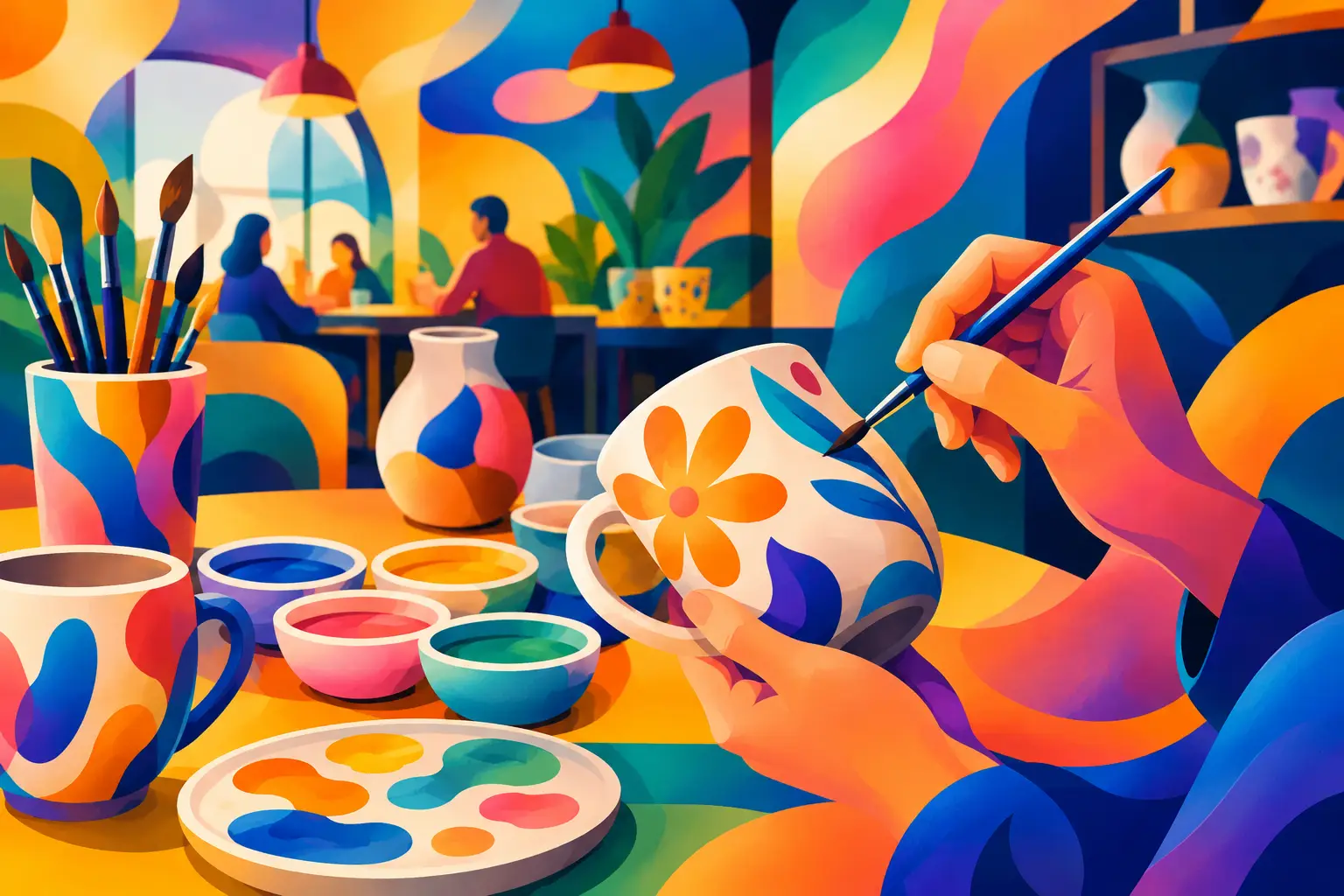
A table full of paint pots, a fresh coffee or cocktail, and a blank ceramic piece with your name on it: that is where the fun starts. How does pottery painting work? It is far simpler than making pottery from scratch. You choose a ready-to-paint ceramic, decorate it in your own style, then the studio glazes and fires it so your design becomes glossy, durable and ready to use.
There is no pottery wheel to conquer and no artistic credentials required. Whether you are entertaining little ones, planning a date, catching up with friends or organising a birthday celebration, pottery painting is a relaxed, sociable activity with a very satisfying takeaway at the end.
How does pottery painting work, step by step?
At a pottery painting café, the creative part is yours and the technical bit is handled for you. You arrive, settle in at your booked table and pick a piece from the available pottery. This could be anything from a mug, plate or bowl to a money box, animal figurine, plant pot or seasonal decoration.
The pieces are made from clay but have already been shaped and fired once. This is called bisque ware. It feels pale, matte and slightly chalky, which makes it the perfect surface for ceramic paints. Because the difficult clay-building stage is already done, you can get straight to the colourful part.
A team member will explain the paints, brushes and any useful techniques before you begin. You do not need to memorise a complicated process. Start with an idea, choose your colours and take your time. A simple striped mug can look brilliant; so can a detailed illustrated plate. The best piece is the one that feels like you.
Once you have finished painting, leave your pottery with the studio. It is then glazed and kiln-fired at high temperatures. That final firing transforms the painted surface into a smooth, shiny finish, bringing out the colour and making the piece suitable for everyday use where appropriate.
Choosing your pottery piece
Choosing is often the hardest part, especially when the shelves are full of possibilities. It helps to think about who the piece is for and how it might be used. A mug makes a brilliant personalised gift, a plate is lovely for a baby handprint or family keepsake, and a trinket dish can be a quick, stylish choice for a first visit.
Prices usually vary by item, because a large serving bowl takes more material, glaze and kiln space than a small figurine. If you are visiting with children, smaller pieces can be a great option for shorter attention spans. If you are making an evening of it with food, drinks and plenty of chat, a larger piece gives you more space to play with.
There is no wrong choice. A small piece painted with care can be every bit as special as a grand design. The key is picking something you will enjoy decorating rather than putting pressure on yourself to create a masterpiece.
Painting your design without the pressure
Ceramic paints can look surprisingly different before firing. Some shades appear lighter or duller on the bisque ware, then deepen and brighten in the kiln. Your host can point you towards colour guides, and it is always worth asking if you are unsure how a particular shade will turn out.
Most designs begin with a base coat. Apply paint in smooth, even layers rather than one thick blob, letting each coat settle before adding the next. Two or three thin coats usually give a more solid finish. If you are painting something that will be handled regularly, such as a mug, take a little extra care with coverage around the rim, handle and base.
You can paint freehand, trace a pattern, use sponges for soft texture or try simple shapes and repeat patterns. Dots, hearts, stars, checkerboards and colourful squiggles all look fantastic once glazed. Lettering is popular too, whether that is a name, an in-joke, a child’s birthday or a cheerful message for a favourite person.
If the thought of a blank mug feels daunting, keep the first idea simple. Pick two or three colours, paint a border, and add one central detail. A clean design with plenty of space can look wonderfully polished. On the other hand, if maximalist colour is your thing, go for it. This is your chance to make something that would never exist on a high-street shelf.
Can you make a mistake?
Usually, yes, you can fix it. Before firing, many paint marks can be carefully wiped away or painted over with a little guidance from the studio team. It depends on how dry the paint is, how much has been layered on and the effect you are trying to achieve, so ask early rather than trying to rescue it alone.
Little imperfections are part of the charm, too. A wobbly line may become the detail you smile at every time you use the piece. Pottery painting is not an exam. It is an experience to enjoy together.
What happens after you finish painting?
When your piece is complete, the studio records your details and takes over. The team will apply a clear glaze, which gives the pottery its glassy finish and seals in your artwork. It then goes into a kiln for firing.
Kilns reach extremely high temperatures, and the firing process cannot be rushed. Pieces need to be loaded carefully, fired through a full cycle and allowed to cool safely before they can be handled. That is why painted pottery is normally collected on a later date rather than taken home the same day.
Collection times vary by studio, firing schedule and the type of item, so check the details when you paint. If you are creating a gift for a birthday, Christmas or another big occasion, book early and leave enough time for firing. It is a small bit of forward planning for a keepsake that lasts for years.
After firing, the colours are brighter, the surface is glossy and the piece is ready to enjoy. Depending on the studio’s guidance and the item you chose, your pottery may be suitable for regular use. Always follow the care advice provided, especially for pieces with metallic finishes or more decorative details.
Why pottery painting works for groups
Pottery painting is one of those rare activities where everyone can join in at their own level. A confident illustrator can spend an afternoon adding tiny details, while someone who has not picked up a paintbrush since school can happily paint a cheerful rainbow mug. You share the same table and the same lovely atmosphere, but nobody has to create the same thing.
That makes it ideal for mixed-age families, friendship groups, hen dos, work socials and celebrations. Children have a focused, hands-on activity, while adults get time to relax, eat and talk. Unlike a fast-paced game or a one-size-fits-all class, there is room to go at your own speed.
At art-ful, that easy-going creativity sits alongside great food, great drinks and great vibes. A pottery session can be the main event, the start of a birthday gathering or a brilliantly different way to spend an afternoon in Worthing town centre. Booking ahead is essential, particularly for weekends, school holidays and larger groups, so your table is ready when you arrive.
A few ways to get a piece you are proud of
Bring an idea if you have one, but do not worry if you do not. Inspiration often arrives once you see the shape of the pottery and the colours in front of you. A favourite flower, a pet, a holiday memory, a child’s drawing or a colour palette from your kitchen can all become a starting point.
Keep the purpose of the piece in mind. For a daily-use mug, choose a design that makes you smile at breakfast. For a gift, add a personal detail that only the recipient will understand. For a group visit, you could each paint a matching colour theme while letting every design stay individual.
Most of all, give yourself permission to enjoy the middle bit: the paint on your fingers, the chat around the table and the anticipation of seeing your design after its transformation in the kiln. The finished pottery is a lovely bonus, but the time spent making it is the part people tend to remember.